
How Frozen’s Act of True Love subverts the Disney Princess template
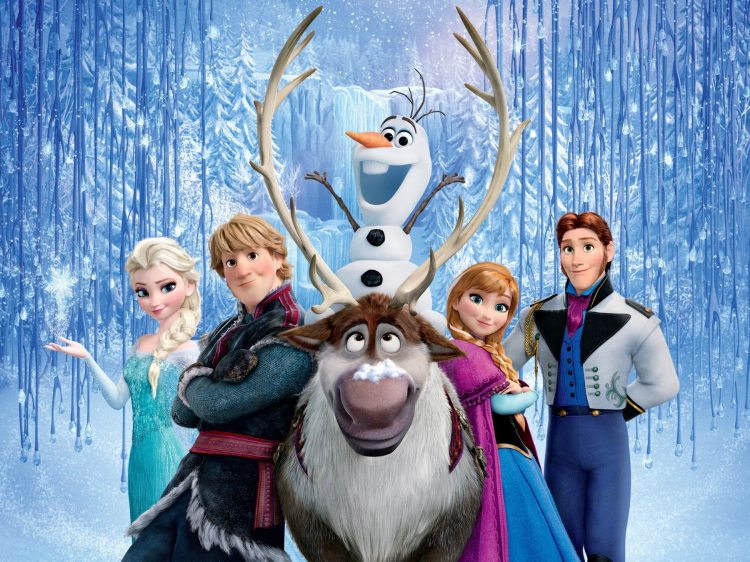
What is it about 2013’s ‘Frozen’ that has helped it to stand out so prominently among the contemporary Disney canon? I mean, ‘Let It Go’ is unarguably a banger but surely that can’t be all there is to it?
On the face of it ‘Frozen’ presents itself as a standard Disney Princess yarn – the sisters at its heart are, after all, literal princesses at the start of the film – but I believe the secret to its success (Broadway-style belters aside) lies in its subversion of the well-established tropes within the Disney Princess sub-genre; a subversion that allows for a resolution that is infinitely more relatable to its audience than the House of Mouse’s standard happily ever after.
So what are the tropes that are usually at play in Disney Princess stories?
First and most sacrosanct is beauty. Can you think of an ugly Disney princess? Even a slightly plain one? Not likely. Sub-optimal aesthetics are permissible only in masc-presenting characters, such as the Beast or the Hunchback of Notre Dame, and even then their much-discussed physical defect exists only to allow the ravishing heroine to see through or past the ugliness to the moral beauty within. In the first of several spoilers for the 2013 film, ‘Frozen’, the beauty of our princesses is not a point of subversion for this story.
Second is an intrinsic and incorruptible goodness. Beyond their exterior beauty, our Princesses will always demonstrate a moral worthiness; some act of kindness, singing to the local wildlife, or a ‘save the cat’ moment that convinces the audience that we’re not rooting for a Mean Girls-esque Regina George figure – “get in, loser. We’re marrying a prince.”
Speaking of which, the third trope that all classic Disney Princesses require is a good man, or more specifically the love of a good man, to save her with true love’s kiss at the climax of her story.
True love’s kiss has featured as a resolving ‘magic’ of Disney’s Princess-themed animated movies since their first feature-length production ‘Snow White and the Seven Dwarfs’ in 1937. ‘Sleeping Beauty’ and ‘Enchanted’ tread the same path of a sleeping curse requiring a kiss to be broken, while Ariel’s ‘The Little Mermaid’ spends the majority of her movie seeking true love’s kiss in order to regain her voice and claim her prince. Though it is actually vehicular homicide that wins the day in that last example, love – and explicitly romantic love – is established throughout the Disney canon as the universal good that will conquer all ills.
This unwavering focus on promoting heterosexual romantic love within animated movies created explicitly for an audience of prepubescent children feels like an oddly specific preoccupation. Beyond being arguably too mature a theme for its juvenile demographic, the ‘romance ex machina’ culminations of these stories often present their impressionable audiences with shallow or downright troubling examples of how adult relationships should work, the Ur example being the sub-genre’s penchant for powerful men kissing sleeping women; it doesn’t matter how into it she might have seemed earlier, my man, she’s literally asleep now.
The curse that is being broken by these non-consensual kisses is the unconscionable sin of existing in society as a single woman. The lack of a good marriage places the princess into a state of stasis, robbing them of their voice and their autonomy. Only romantic success, and implicitly marriage, can save them. It is a promotion of heteronormativity that smacks of indoctrination, particularly when served up so frequently to a target audience that, in terms of their lack of sexual maturity, will be totally ambivalent to, if not disgusted by, the concept of romance.
So how do our sisters, Anna and Elsa, measure up to the tropes of the Disney Princess template?
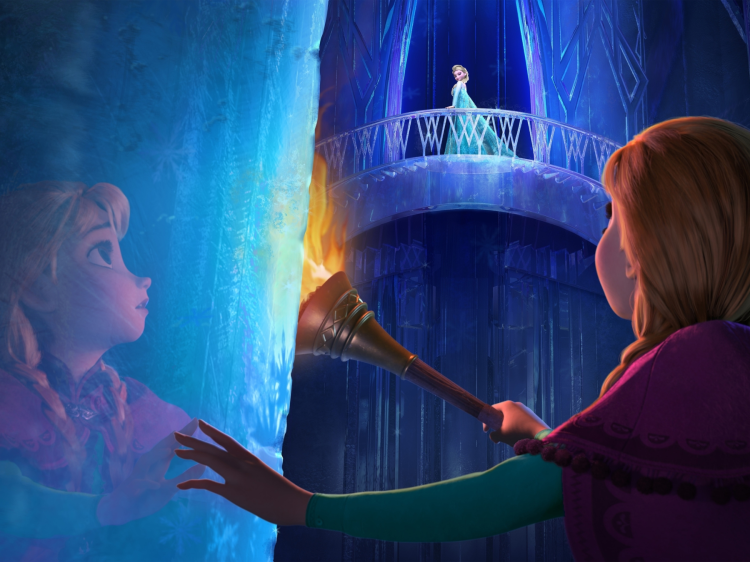
They’re beautiful, sure, but the film raises some early questions about their intrinsic goodness. Rather than providing the audience with an example of why we should root for these characters, we are instead offered reasons to doubt them.
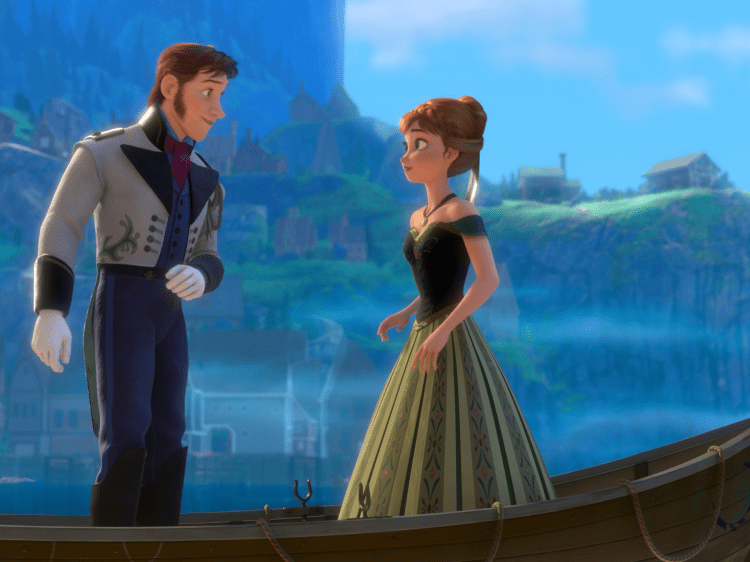
One of the first things that we see Elsa do is lose control of her powers and injure her sister, while Anna, immediately upon being released from her palatial captivity, impulsively proposes marriage to the first person she meets. Both are demonstrated to be clumsy, flawed, and out of control in their own ways – a yin-yang pairing of icy introversion and fiery extroversion. The intrinsic goodness of both characters emerges from their love for one another.
Before the accident that will provoke Elsa’s isolation, the audience is treated to the sight of the sisters playing together, enjoying each other’s company. Once it becomes clear just how dangerous Elsa’s ice ability can be to the people around her, and especially Anna, Elsa sacrifices her happiness to protect them, voluntarily taking on the stasis that would usually be forced upon the heroine of this kind of tale. Anna, in turn, doesn’t hesitate in sacrificing what she believes to be true love in order to help her sister. She puts her fledgling relationship with Prince Hans on the back-burner, walking away from true love’s kiss to follow her sister into the wilderness.
In creating their own curse and denying themselves love (and the security of marriage) for the sake of others, the sisters work against the goals towards which princesses are typically driven.
So what of our third trope, the love of a good man being required to save the day?
Enter Kristoff.
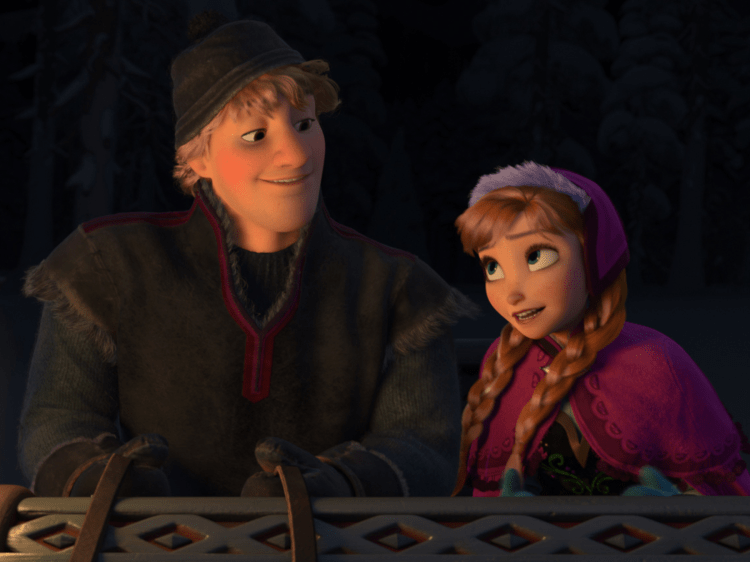
In a film that boasts a number of misleads and reversals, Kristoff is the reddest and most herring-like of them all. He is the first character that we see in the film, a child lurking with his reindeer calf at the sidelines of the ice workers’ song that opens the film, The Frozen Heart.
Kristoff serves as the guide, foil, and alternative love interest for Anna and, despite all of this, his importance to the story of ‘Frozen’ lies in the fact that he has no importance to the story of ‘Frozen’.
By the princess-coded beats of Disney story telling, this main male character – the first main character to whom we are introduced, no less – should have some manner of outsized impact upon the plot; like the princes awakening Snow White and Aurora with a kiss, like the divorce lawyer kissing Giselle back to life, or like Prince Eric fatally steering the prow of a ship into the heart of Ariel’s now-titanic magic loan shark, Ursula.
The beauty of ‘Frozen’ is that Kristoff is perfectly maneuvered by the plot to be in a position to save the day with the kiss being actively sought by Anna. He is the Ethan Hawke to Prince Hans’ Ben Stiller in a Disney-fied ‘Reality Bites’ scenario – a poor, plain-spoken commoner who is, would you believe it, a better fit than the rich and charming cad. The audience expects Kristoff to succeed in his charge through the snow storm and heal Anna’s wounded heart with a kiss; a kiss that will presumably fix everything else as well somehow, because, you know, magic.
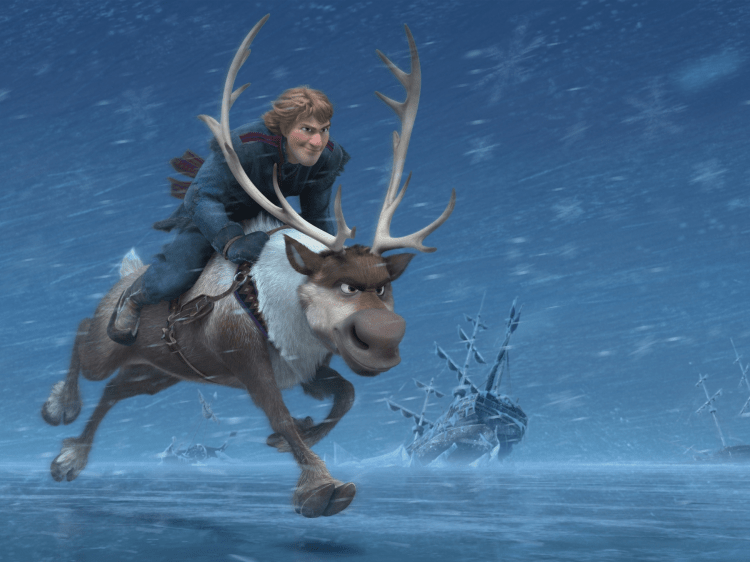
Kristoff is a trope-coded misdirect used to pull our attention away from the magic that will actually win the day, the magic that has powered the story right from the first non-ice-worker-related frame, and the secret sauce to the abiding popularity of ‘Frozen’: Anna and Elsa’s love for each other.
While these women are family, it is most important that they are friends, confidantes, and playmates. Kids watching the film might not have siblings but they’ll definitely have playmates. Where this young target audience might struggle to grasp the compulsion for a heterosexual pairing to be together and commit to one another in the happily ever after of implied marriage, they will immediately understand the desire to spend time with a friend, build a snowman with them, and make sure that they are happy and safe.
‘Frozen’ even goes so far as offering its audience a glimpse of a magic-free version of Anna and Elsa’s time playing together, via the Grand Pabbie’s cure, to ensure that we understand how universally relatable the sisters’ love for one another is. You don’t need ice powers to, as Pabbie says, “keep the fun”.
The film succeeds in having its cake and eating it too by presenting, with po-faced innocence, a princess-led fairy tale story with all the trappings of a romance-focused plot. What it serves up, however, is an ode to family and friendship – to the loyalty of one playmate to another – that offers children a glimpse of a world in which women are empowered to help one another and exercise self-determination without assistance or permission from any patriarchal agent.
It also offers a male role model in Kristoff who is there not to save the girl and fix everything, nor to impose himself on the events around him, but rather to bear witness as Anna and Elsa save themselves.

